
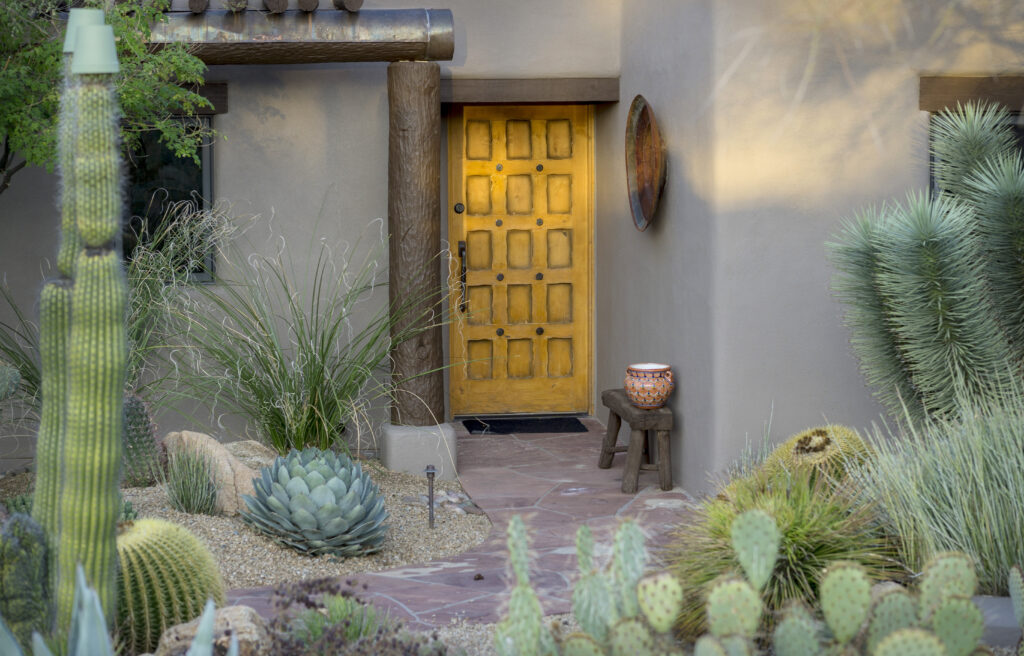
Phoenix, AZ, is one of the fastest-growing metropolitan areas in the country, and it shows in the real estate market. Tens of thousands of new residents arrive each year, and the Valley of the Sun accommodates them with a mix of rapid new construction on the outer edges of the metro, active resales in established neighborhoods closer to the core, and a commercial sector that keeps pace with the residential demand. That scale creates real complexity for buyers and property owners trying to make sound decisions, and it makes the quality of a property inspection more consequential, not less. Vertex Property Inspections provides professional residential and commercial inspection services across Phoenix and the Valley, with the depth of service to address what the desert environment actually does to homes and the buildings people invest in here.
The Sonoran Desert is not a passive backdrop. It shapes every property it touches. Extreme heat, UV radiation, dust, thermal expansion and contraction, and a specific set of pest pressures all factor into what a thorough property inspection looks like in this market. Add the Valley’s rapid pace of new construction, the growing prevalence of solar installations, and the distinct character of submarkets from Buckeye and Surprise in the West Valley to Scottsdale and Tempe in the East, and it becomes clear that a generic inspection approach falls short of what Phoenix buyers actually need.
About Phoenix, AZ
Phoenix is the fifth-largest city in the United States and the economic and cultural hub of the Southwest. It sits in the northern reaches of the Sonoran Desert at roughly 1,100 feet in elevation, surrounded by mountain preserves and bounded by a metro area that spans more than 500 square miles. The Valley of the Sun’s nickname is literal. Phoenix averages nearly 300 sunny days annually, and that sunshine drives everything from the regional energy economy to the pace of exterior building material degradation.
The metro is organized around a set of distinct regional identities. The West Valley, including Glendale, Peoria, Surprise, and Buckeye, has been one of the most active growth corridors in the state, with master-planned communities and affordable price points drawing buyers from higher-cost markets. The East Valley, including Scottsdale and Tempe, offers higher median prices, established commercial corridors, and a mix of mid-century and luxury-tier real estate. North Phoenix has seen substantial development of its own, with newer communities built along the Loop 303 and Loop 101 corridors. The historic core neighborhoods closest to downtown represent a third character: densely developed, architecturally varied, and increasingly popular with buyers seeking proximity over square footage.
Property Insights
Vertex Property Inspections offers a complete lineup of inspection and testing services calibrated to the Phoenix market’s specific demands.
Residential Property Inspections evaluate the full scope of a home’s structure and systems: foundation, framing, roofing, exterior, HVAC, plumbing, electrical, and interior conditions. In Phoenix, a few things stand out. Flat and low-slope roofs are common and have their own failure modes. Two-stage and variable-speed HVAC systems running near capacity for six months of the year wear differently than systems in milder climates. Stucco exteriors common throughout the Valley can conceal water intrusion at window surrounds, roof-to-wall intersections, and utility penetrations. A thorough residential inspection accounts for all of it.
Commercial Property Inspections serve the full range of non-residential property types in the Phoenix metro, from office buildings and retail spaces to industrial facilities and multi-family investments. A commercial inspector brings a different scope and documentation standard than a residential inspection, and Vertex provides that service throughout the Valley.
Termite Inspections carry particular weight in Arizona. The state is home to multiple termite species, including the desert subterranean termite, a native species uniquely adapted to the arid Southwest that can be more aggressive than the eastern subterranean species familiar to inspectors in other regions. Drywood termites, which don’t require soil contact and can infest wood framing, furniture, and trim directly, are also active in Phoenix. A wood-destroying insect inspection documents current activity, evidence of prior treatment, and any accessible damage, giving buyers specific information rather than assumptions about pest history.
Air Quality Inspections address a concern that’s more significant in Phoenix than in most other major American cities. The Phoenix metro regularly ranks among the highest in the country for particulate matter pollution, driven by desert dust, vehicle emissions, and periodic wildfire smoke from fires in Arizona and neighboring states. Haboobs, which are large dust storms that roll across the desert floor and engulf the metro, drive particulates into buildings through gaps in the envelope. Indoor air quality testing evaluates the conditions inside the home, screening for elevated particulate levels, mold spores, volatile organic compounds, and other contaminants that affect the health and comfort of occupants.
Thermal Imaging uses infrared camera technology to detect temperature variations across surfaces that standard visual inspection can’t see. In Phoenix, the applications are particularly relevant: thermal imaging reveals HVAC duct leakage that drives up energy costs in a climate where cooling is essential for months at a time, identifies insulation voids that allow heat to bypass the envelope, flags moisture intrusion at wall and roof assemblies, and surfaces electrical hot spots that may not yet show visible symptoms. It’s a technical layer that upgrades the information quality of every inspection it accompanies.
Drone Inspections provide safe, detailed documentation of roof surfaces and elevated exterior features without requiring physical traversal of the roofline. In Phoenix, this matters practically: tile roofs are prevalent throughout the Valley, and walking on clay or concrete tile in summer heat, with surface temperatures that can exceed 160 degrees, poses real risks to both the inspector and the roofing material. Drone imagery captures the condition of the full roof surface, ridge lines, penetrations, and flashing in detail, supporting accurate documentation without the need for exposure.
New Build Inspections — All Phases serve buyers purchasing homes from builders across the Valley’s active new construction market. Phoenix and its surrounding communities have some of the highest new-home permit volumes in the country, but new construction doesn’t guarantee quality. Phase inspections occur at critical stages: after foundation work, at the pre-drywall stage when framing and mechanical rough-ins are accessible, and at the final walkthrough before closing—catching issues when they’re still correctable rather than after they’re buried in finished walls and ceilings.
11-Month Warranty Inspections help new construction buyers use their builder warranty before it expires. Most builders provide a one-year warranty on workmanship and materials, but many buyers aren’t sure what to look for and let the deadline pass without taking advantage of it. A warranty inspection conducted before the 12-month mark documents developing issues that are still the builder’s responsibility to resolve.
Pre-Listing Inspections give sellers an advanced assessment of their property before it hits the market. In a competitive market like Phoenix, where buyers often move quickly, and sellers want clean transactions, a pre-listing inspection allows sellers to address findings on their own terms and present buyers with documented information that reduces friction in negotiations.
Solar System Inspections have become increasingly standard in Phoenix, where solar installations are more common per capita than in almost any other market in the country. Arizona’s sunshine and energy costs make solar a practical investment, and the Valley has seen rapid adoption across all price points and property types. A solar inspection evaluates panel condition, racking and mounting integrity, inverter performance, electrical connections and disconnects, and overall system output, providing buyers with accurate information about what they’re inheriting rather than relying on seller-provided documentation that may not reflect current performance.
Neighborhoods Across the Valley
Phoenix’s residential geography spans a range of contexts that each bring their own inspection considerations.
Arcadia, straddling the Phoenix-Scottsdale border along Indian School Road, is one of the most sought-after residential areas in the Valley, known for its mature citrus trees, custom and semi-custom ranch homes, and proximity to Camelback Mountain. Properties here tend to be older and larger, which makes professional inspection particularly valuable.
Maryvale in west Phoenix is one of the city’s most historically significant neighborhoods, with mid-20th century housing stock and a densely residential character that reflects Phoenix’s original suburban expansion. Many homes here are in the range where deferred maintenance and aging systems are the primary inspection concerns.
Encanto, near Encanto Park in the central city, is a historic neighborhood with established landscaping, older construction, and a community identity that attracts buyers looking for in-town living with character. Properties in Encanto often have the vintage systems and infrastructure that make thorough inspection especially worthwhile.
The North Valley communities, including newer master-planned neighborhoods along Deer Valley Road and the 303 corridor in Peoria, Surprise, and Buckeye, represent the Valley’s active growth edge, with contemporary construction and newer mechanical systems, yet the full range of new-construction quality variability that phase inspections are designed to catch.
Scottsdale and Tempe in the East Valley each offer their own residential character. From Scottsdale’s luxury-tier custom homes and resort-adjacent communities to Tempe’s dense, university-adjacent neighborhoods with a mix of older properties and newer infill.
Local Attractions and Activities
Phoenix’s outdoor and cultural amenities reflect the desert environment in ways that make the city genuinely distinct.
Desert Botanical Garden in Papago Park showcases one of the most comprehensive collections of desert plants in the world, with more than 50,000 plants across 140 acres of Sonoran Desert landscape. It’s a world-class institution and one of Phoenix’s defining cultural assets.
The Heard Museum in midtown Phoenix is one of the country’s premier institutions for Native American art and culture, with a permanent collection that spans Southwest tribal traditions and rotating exhibitions that draw visitors from across the region and beyond.
South Mountain Park and Preserve on the southern edge of Phoenix is one of the largest municipal parks in the United States, with more than 16,000 acres of desert preserve, an extensive trail network, and elevated views of the Valley that put the metro’s scale into perspective.
Camelback Mountain and Echo Canyon Recreation Area provide one of the most iconic hiking experiences in the Valley, with summit trails that draw thousands of visitors a week and views that define Phoenix’s visual identity.
Why Choose Vertex for Your Property Inspection?
The Phoenix market rewards buyers and investors who do their due diligence, and it penalizes those who don’t. Vertex Property Inspections brings both the breadth of services and the local expertise to serve a market this large and this varied, from desert-adapted termite evaluations and solar system documentation to commercial property inspections and drone-assisted roof surveys. Every inspection is conducted with the rigor the Valley demands, and every report is built to give clients clear, actionable information rather than documentation that raises more questions than it answers.


Schedule Your Property Inspection in Phoenix, AZ Today
Vertex Property Inspections is ready to schedule your inspection throughout Phoenix and the Valley. Contact us to schedule your inspection or ask questions.
In addition to Phoenix, Vertex serves property owners and buyers in Glendale, Peoria, Scottsdale, Surprise, Tempe, Buckeye, and communities throughout the West Valley, East Valley, and North Valley.